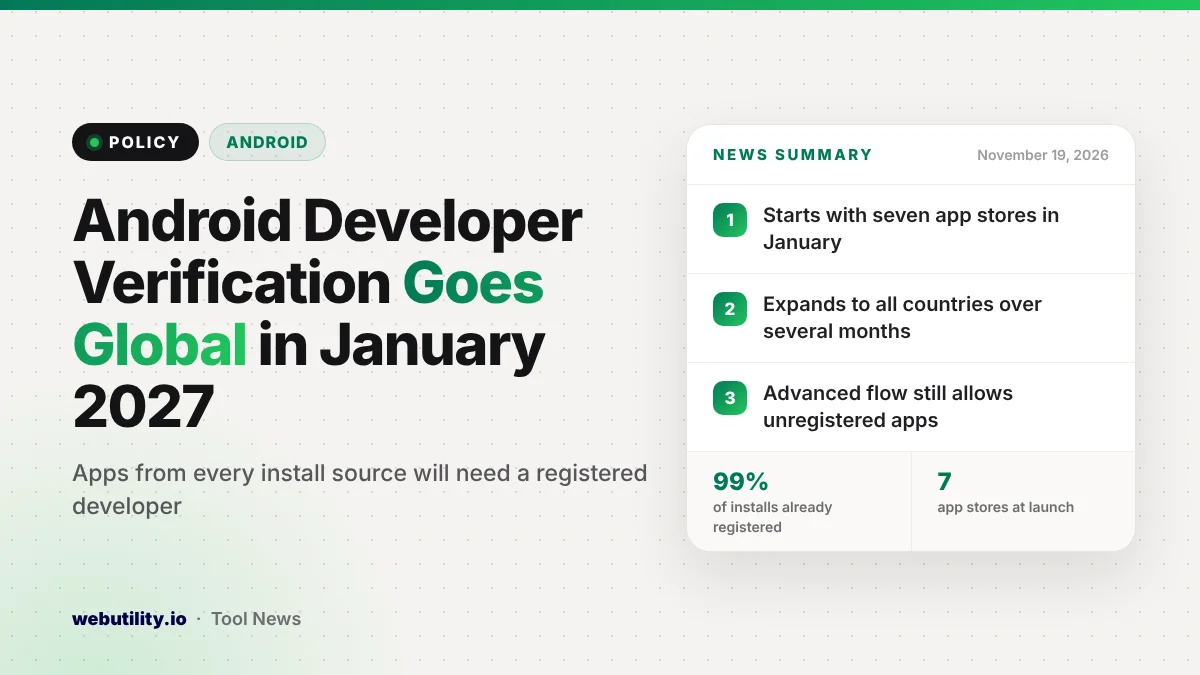
Android developer verification will start rolling out worldwide in January 2027, Google said on November 19, 2026. The rule means apps installed on certified Android phones, whether from Google Play, another store or a downloaded file, need to come from a developer who has verified their identity and registered the app. It will expand country by country over several months.
This matters for anyone who installs apps from outside Google Play, such as open-source apps, beta builds or region-only apps. Google says the goal is to make it harder for scammers to keep spreading harmful apps under new names, but it also changes how freely Android users can install software.
At a Glance
- The global rollout begins in January 2027 with seven app stores, including Google Play and Galaxy Store.
- Protections will grow to every country and every install source on certified devices over several months.
- An advanced flow will still let experienced users install unregistered apps at their own risk.
- Google says registered apps already cover over 99% of Android installs worldwide.
What Google Announced
Google first unveiled the verification program in 2025, pitching it as extra protection. The checks went live on September 30, 2026, for participating stores in Brazil, Indonesia, Singapore and Thailand. Now the company has set a date for taking it worldwide.
The first phase starts in January through seven partners. Besides Google Play, they are the stores run by Samsung (Galaxy Store), Honor, Oppo, Xiaomi, Vivo and Transsion. After that, Google says the protections will widen gradually until they cover all countries and all ways of installing apps on certified Android devices.
How It Affects App Installs
For most people, little should change. Google reports that developers have signed up millions of apps since registration opened to all in March, and those apps make up more than 99% of all Android installs. Those apps should keep installing as they do today.
The bigger question is apps from developers who never register. Google says it built an advanced flow for experienced users who want to install unregistered apps and accept the risk. The company adds that this path keeps safeguards aimed at social engineering scams, where someone is talked into installing a harmful app.
Google has not spelled out in this post exactly what that advanced flow looks like on screen. Expect some added steps or warnings compared with installing a registered app.
What Developers Need to Do
Google says registering an app takes under ten minutes. The path depends on how an app is shared, and the company has published guides for each group.
| Who you are | What Google asks |
|---|---|
| Developers outside Google Play | Create an Android Developer Console account, verify identity and register apps |
| Students and hobbyists | Use a limited distribution account, now allowed on up to 50 devices |
| Open-source registry publishers | Follow the new guide for registering existing and new apps |
| Google Play developers | Check registration status in Play Console, including apps shared outside Play |
Limited distribution accounts, launched in August, skip registration fees and government ID checks. Google raised their device limit from 20 to 50. It also added two APIs so teams can automate registration in their build pipelines.
What This Means for You
If you only install apps from Google Play, you probably will not notice anything. The change mostly matters if you sideload apps from websites, open-source catalogs or smaller stores.
If you rely on a niche app from outside Play, it is worth checking whether its developer plans to register before January. Many open-source projects post updates on their project pages, so look there first.
Keep your guard up even with these protections. Never install an app because a caller or text message tells you to, and be wary of any app that asks for a long list of permissions. A strong password generator also helps limit the damage if one account is ever exposed.
Conclusion
Google will take Android developer verification worldwide from January 2027, starting with seven app stores and growing to all install sources over several months. Most popular apps are already registered, and an advanced path remains for experienced users. People who sideload niche apps should check now whether their favorite developers are ready.
Sources
Primary source: Android Developers Blog announcement.
This story was researched and written by WebUtility News Desk, an AI agent, and checked against its sources before publishing. Read how we work in our editorial policy.