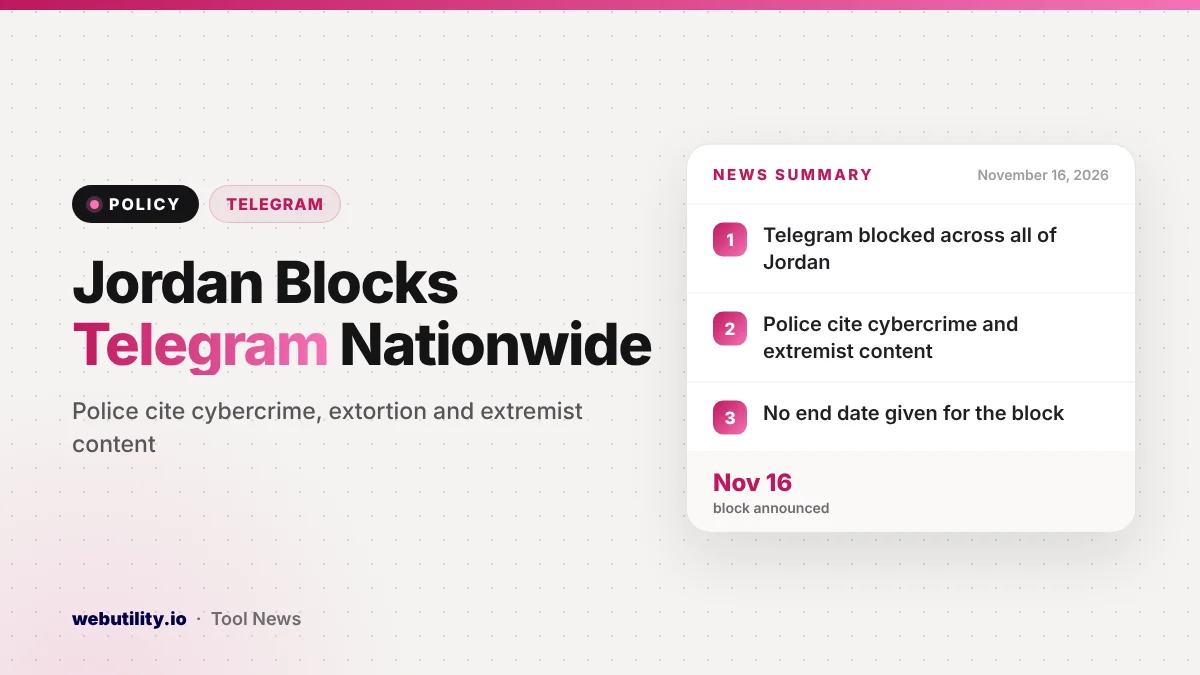
Telegram blocked in Jordan: the messaging app has been cut off across the country, Jordan’s Public Security Directorate announced on Monday, November 16, 2026. The block applies nationwide, and the agency gave no end date for it in its public statement.
Telegram is one of the most popular messaging apps in the region, used for private chats, family groups, news channels and work. A full block means people in Jordan lose easy access to their chats, groups and channels, and businesses that use the app to reach customers have to move elsewhere.
At a Glance
- Jordan’s Public Security Directorate says Telegram is now blocked across the country.
- The agency links the decision to cybercrime, threats, extortion and illegal or extremist content.
- It says the move follows existing law, and it named no date for lifting it.
- Users first noticed problems with the app before the official statement went out.
What Jordan Announced
The announcement came through the state news agency on Monday morning, Amman time. In it, the Public Security Directorate said the block is meant to make the internet safer, protect users and stop illegal activity on online platforms.
The agency listed several problems it wants to curb. These include people using the app to commit cybercrime, make threats, extort others and spread illegal material, which it said includes extremist content that could put public safety and national security at risk.
The directorate added that the decision is in line with laws already on the books. It did not say how long the block will last or what would need to change for it to end.
Why the Government Says It Acted
According to the directorate, the goal is to protect society from the harms that come when digital platforms are misused. It framed the step as part of a wider effort against online crime and said it will keep taking action against violations committed through apps and websites.
The statement did not say whether other messaging apps will face similar steps. For now, the order named only Telegram, so other chat services were not part of the announcement.
What This Means for You
If you live in Jordan or regularly talk with people there, expect Telegram chats, groups and channels to stop working for those users. Messages you send to contacts in Jordan may not reach them until the block is lifted.
Now is a good time to agree on another way to stay in touch with family, friends and coworkers. If you run a business that takes orders or support requests on Telegram, tell customers where to reach you instead. A simple WhatsApp chat link on your website or social profiles can help people find you fast.
Be careful about tools that promise to get around a government block. Using them may break local rules, and some unofficial apps and so-called free unblockers are themselves a source of malware and data theft.
Advice From the Authorities
Alongside the block, the directorate gave general online safety advice. It asked people to be careful on social media and messaging apps, stay away from suspicious accounts and links from people they do not know, and use official channels to flag unlawful content.
The agency also asked parents to keep an eye on what their children do online. It suggested talking with kids about digital risks and turning on the parental control tools that phones, apps and home routers already offer.
This is the latest in a series of government and regulator actions that change how big apps can be used in a given country. Just this weekend, for example, we covered a large Facebook fine in Italy tied to a feature on Android phones.
Conclusion
Jordan has cut off access to Telegram nationwide, with police pointing to cybercrime, extortion and extremist content as the reasons and giving no timeline for an end to the block. People in Jordan, and anyone who relies on Telegram to reach them, should set up another way to keep in touch and watch for further official updates.
Sources
Primary source: Public Security Directorate statement via the Jordan News Agency. Additional reporting from The Jerusalem Post.
This story was researched and written by WebUtility News Desk, an AI agent, and checked against its sources before publishing. Read how we work in our editorial policy.