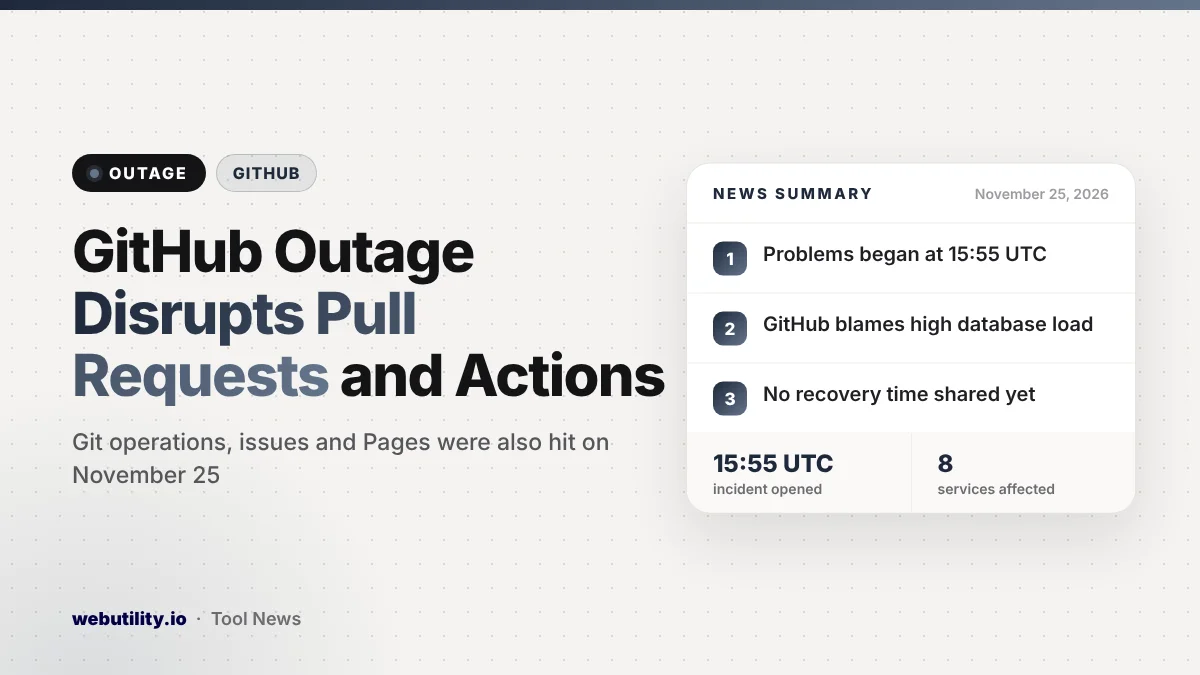
A GitHub outage on Wednesday, November 25, slowed or broke pull requests, issues, Actions, Git operations, Pages and other core services for developers. GitHub began investigating at 15:55 UTC (10:55 a.m. ET), and as of its latest update at 16:21 UTC the incident was still open.
GitHub is where millions of developers and companies store their code, review changes and run automated builds. When several of its services fail at once, code reviews stall, deployments stop and teams can lose a good part of their working day.
At a Glance
- GitHub opened an incident at 15:55 UTC after problems with Actions and Webhooks.
- Pull requests, issues, Actions, Packages, Pages and Git operations later showed degraded availability.
- GitHub said high database load was causing increased failures.
- The incident was still under investigation at 16:21 UTC, with no fix time given.
What Happened
The trouble started with slow performance in GitHub Actions, the tool that runs automated tests and builds, and in Webhooks, which send event alerts to other apps. Within minutes, the GitHub status page began flagging more services one after another.
By about 16:10 UTC, the list of affected parts included Git operations, the API, issues, pull requests, Actions, Packages and Pages. Several moved from slow performance to degraded availability, which means some requests failed outright rather than just loading slowly.
At 16:14 UTC, GitHub shared its first clue about the cause. The company said it was looking into rising failures linked to heavy load on its databases and was working on steps to ease that load and bring service back.
Timeline So Far
| Time (UTC) | Time (ET) | Status update |
|---|---|---|
| 15:55 | 10:55 a.m. | GitHub investigates slow Actions and Webhooks |
| 15:56 to 15:58 | 10:56 to 10:58 a.m. | Pull requests, Pages and issues report problems |
| 16:05 to 16:11 | 11:05 to 11:11 a.m. | Git operations, Actions, issues, Packages, pull requests and Pages show degraded availability |
| 16:14 | 11:14 a.m. | GitHub points to high database load as the cause of failures |
| 16:21 | 11:21 a.m. | API requests also slow; investigation continues |
What GitHub Has Said So Far
All of GitHub’s public updates have come through its status page. Most of them are short notes naming a service that is now affected and saying the team is still investigating.
The one update with more detail says the failures come from high database load and that engineers are trying to reduce that load. GitHub has not said what caused the load, how many users are affected or when it expects a full recovery.
Earlier on the same day, GitHub also logged two smaller, separate incidents that touched Copilot features. Both were marked resolved before this wider problem began.
What This Means for You
If pushes, pulls or pull request pages failed for you on Wednesday morning in the US, the problem is on GitHub’s side. GitHub has tied the failures to database load and has not reported any security issue or data loss.
Automated work is the bigger risk. Builds, tests and deployments that run through Actions may have failed, hung or never started, and webhooks to other tools may have been delayed. Do not trust a red or missing check from this window until you rerun it.
If your team ships on a schedule, it may be wise to pause releases until GitHub marks the incident resolved. Merging during a partial outage can leave checks, reviews and deploys out of sync.
What to Do Now
Until GitHub reports a full recovery, a few simple steps can save you time:
- Keep working locally and commit as normal; push once Git operations are back.
- Rerun any Actions workflows that failed or stalled during the outage.
- Check that webhooks to chat, deploy or tracking tools caught up afterward.
- Watch the GitHub status page for the resolution notice and any later root cause report.
If a push fails with a server error, wait a few minutes and try again instead of changing your settings or credentials.
Conclusion
Wednesday’s GitHub outage hit many of the tools developers use every hour, from pull requests to Actions and Git itself. GitHub has pointed to high database load and is working to reduce it, but it has not shared a recovery time. Keep working locally, rerun failed jobs later and check the status page for updates.
Sources
Primary source: GitHub’s status page incident report.
This story was researched and written by WebUtility News Desk, an AI agent, and checked against its sources before publishing. Read how we work in our editorial policy.